
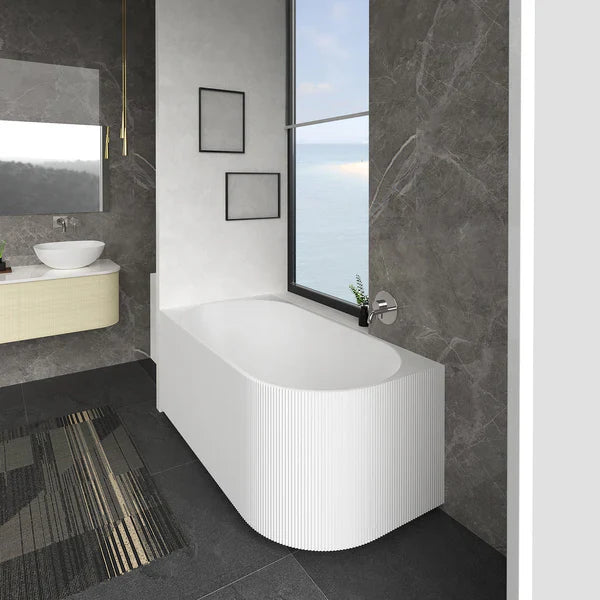
Renovating a bathroom is more than just picking pretty tiles and a sleek new vanity. It's about crafting a space that functions seamlessly, feels comfortable, and complies with local regulations. In Australia, understanding precise bathroom dimensions isn't just helpful; it's absolutely critical for a successful project. Let's dive in and unlock the secrets to designing a bathroom that truly works.
Why Australian Bathroom Dimensions Are Crucial for Your Renovation
Think of bathroom dimensions not as rigid rules, but as the underlying framework that dictates everything else. Get them right, and your bathroom will feel spacious, intuitive, and a joy to use. Skimp on this planning, and you could end up with a beautiful space that's frustratingly impractical.
Functionality and compliance
Imagine this: You’ve just finished a stunning bathroom renovation. The freestanding tub gleams, the shower is opulent, and the vanity is a work of art. But then you try to open the shower door, and it clashes with the toilet. Or you can’t comfortably stand in front of the vanity without bumping your elbows. This isn't just annoying; it's a fundamental design flaw that could have been avoided with careful dimensional planning.
Beyond personal comfort, there's the equally important aspect of compliance. Australia has specific building codes and standards that dictate minimum clearances, accessibility requirements, and ventilation guidelines. Ignoring these can lead to costly reworks, delays, and even safety hazards. For instance, did you know there are specific distances required between power outlets and water sources? Or that accessible bathrooms have very precise turning circles for wheelchairs? These aren't suggestions; they're legal requirements designed to ensure safety and functionality for all. Getting the dimensions right from the outset means your beautiful new bathroom isn't just a feast for the eyes, but also a perfectly functional, compliant, and comfortable space.
The Standard Bathroom Dimensions
When we talk about standard bathroom dimensions, it’s important to remember this isn't a one-size-fits-all decree. It's more of an average, a starting point based on common construction practices and the typical footprint of Australian homes. Your actual space will dictate what's possible, but knowing these baselines helps you understand what to aim for or how to adapt.
Average bathroom sizes across different home types
For a typical Australian home, a main bathroom usually falls within the range of 2400mm x 2400mm to 3000mm x 2400mm. This provides enough space for a toilet, vanity, shower, and often a bathtub. If you're working with an existing home, measure your current bathroom to get a realistic sense of what you're dealing with. New builds might offer a bit more flexibility, but these figures are a good benchmark.
Small bathrooms and powder rooms
Not every home can boast a sprawling main bathroom, and that’s perfectly fine! Small bathrooms and powder rooms are common, especially in apartments or as secondary facilities.
-
A small bathroom that still includes a shower might be around 2000mm x 1800mm or even 1800mm x 1800mm. In these spaces, clever design is paramount, think wall-mounted fixtures, corner showers, and compact vanities.
-
A powder room (toilet and basin only) can be as compact as 1500mm x 900mm or even 1200mm x 800mm for a very tight space. The key here is ensuring comfortable access to the toilet and basin, even if the door almost touches your knees when closed!
En-suites and larger family bathrooms
En-suites, often attached to the master bedroom, tend to be slightly smaller than the main bathroom but larger than powder rooms, typically ranging from 2400mm x 1800mm to 2800mm x 2000mm. They prioritise a shower, toilet, and vanity, with a bathtub being a less common inclusion unless space is generous.
Larger family bathrooms or luxury bathrooms can be much more expansive, easily exceeding 3000mm x 2400mm. These are the spaces where you might find double vanities, separate showers and bathtubs, or even additional features like linen presses or dedicated dressing areas. The sky's the limit here, as long as your budget and floor plan allow!
Essential Fixture Dimensions
Once you understand your room's overall footprint, it’s time to zoom in on the star players: your bathroom fixtures. The specific dimensions of these items, and the space they demand around them, will dictate the flow and comfort of your bathroom.
Toilets
Ah, the humble toilet. Often overlooked in design, but absolutely critical for functionality.
-
Dimensions: A standard toilet pan usually projects 680-720mm from the wall, with a width of 360-400mm. Wall-hung or concealed cistern toilets can save some visual bulk, but the pan itself still needs its space.
-
Clearance: This is where many go wrong. You need at least 300mm clear space from the centre line of the toilet to any adjacent wall or fixture (like a vanity). Ideally, aim for 380-450mm for optimal comfort. In front of the toilet, you require a minimum of 600mm clear space for comfortable access and egress.
Showers
Showers are evolving, offering more options than ever.
-
Minimum Size: For a functional shower, you need at least 900mm x 900mm. This is the absolute minimum to avoid feeling claustrophobic.
-
Comfortable Size: A more comfortable shower, allowing room to move without constantly bumping elbows, is 1000mm x 900mm or 1200mm x 900mm.
-
Walk-in Showers: These are incredibly popular for their open feel. While they don't have a fixed "door" dimension, you need to ensure adequate splash protection. A walk-in shower typically needs a minimum opening of 600-700mm, and the shower area itself should be at least 1200mm deep to prevent water from splashing out too much. If you're designing a doorless walk-in, aim for a minimum depth of 1500mm to truly contain splashes.
Vanities and Sinks
Vanities are the workhorses of the bathroom, providing storage and a functional basin.
-
Height: Standard vanity height in Australia is typically 850mm to 900mm from the finished floor to the top of the benchtop. Consider the height of the basin if it's a vessel sink.
-
Depth: Standard vanity depth is 450mm to 550mm. Compact options as shallow as 350mm exist for powder rooms.
-
Width: This varies wildly based on your space and needs.
-
Single basin: From 600mm (compact) to 900mm or 1200mm (comfortable with bench space).
-
Double basin: A minimum of 1200mm, but ideally 1500mm or 1800mm to allow two people to use it comfortably simultaneously.
-
Clearance: You need at least 700mm clear space in front of the vanity for comfortable use, and don't forget the 300mm side clearance from the basin's centreline if it's near a wall or other fixture.
Bathtubs
A bathtub can be a sanctuary, but it demands significant space.
-
Standard Built-in Tub: Typically 1500mm to 1700mm long and 700mm to 800mm wide. These fit neatly against walls, often with a shower over the tub.
-
Freestanding Tub: These are visual showstoppers but require more floor space around them to look good and be cleanable. You'll want at least 100mm to 150mm clearance from walls, but ideally 300mm+ for aesthetic appeal and ease of cleaning. Dimensions vary, but expect lengths from 1500mm to 1800mm and widths from 700mm to 900mm. Always measure your chosen tub precisely!
-
Shower Over Tub: If combining, ensure the tub base is flat enough and consider a shower screen or curtain. The minimum length of a tub for a comfortable shower is generally 1500mm.
Accessibility and Universal Design: Planning for Everyone
Designing for accessibility isn't just about compliance; it's about creating a truly inclusive space. Even if you don't require an accessible bathroom now, considering these principles can future-proof your home and enhance its value.
Meeting Australian Standards for Accessible Bathrooms (AS 1428.1)
Australian Standard AS 1428.1 (Design for access and mobility – General requirements for access – New building work) provides comprehensive guidelines for accessible design. While residential bathrooms don't always need to meet the full commercial standard, understanding these benchmarks is invaluable. Key elements include wider doorways, specific clearances around fixtures, and reinforced walls for grab rails.
Key measurements for wheelchair access and support rails
-
Doorway Width: A minimum clear opening of 820mm is essential for wheelchair access. This often means a door leaf of 870-900mm.
-
Turning Circle: A clear, unobstructed floor space of at least 1500mm diameter is required for a wheelchair to turn 360 degrees. This is often the biggest challenge in smaller bathrooms.
-
Toilet:
-
A minimum of 900mm wide x 1200mm deep clear space is needed in front of and to the side of the toilet.
-
The toilet pan itself should be positioned with the pan rim between 460mm and 480mm from the finished floor level.
-
Grab rails are crucial, typically at heights around 800-810mm from the floor, extending a certain distance on either side of the toilet.
-
Shower:
-
A stepless, hob-less entry is mandatory for wheelchair access.
-
The shower area should be at least 900mm x 900mm, but ideally 1200mm x 1200mm for assistance.
-
Grab rails are specified for vertical and horizontal placement within the shower, typically at 800-810mm height.
-
A fold-down shower seat might be required, usually positioned at 480mm from the floor.
-
Basin:
-
Clear space under the basin is required for knee and toe clearance, typically from 680-750mm under the basin.
-
The top of the basin rim should be no higher than 830mm from the floor.
-
Lever-style tapware is preferred for ease of use.
Future-proofing your bathroom for ageing in place
Even if full AS 1428.1 compliance isn't your goal, incorporating some universal design principles makes sense.
-
Reinforce Walls: Even if you don't install grab rails now, reinforce the studs behind where they could go in the future (around the toilet, shower, and possibly the bath). This saves major hassle later.
-
Wider Doorways: Always opt for the widest door opening your layout allows.
-
Level Entry Shower: A hob-less shower not only looks sleek but also eliminates a tripping hazard for all ages.
-
Non-Slip Flooring: Choose tiles with a good slip rating.
-
Good Lighting: Bright, even lighting is vital for safety, especially as eyesight diminishes.
Clearances and Ergonomics
Beyond the big fixtures, it's the space around them that truly defines a bathroom's functionality. This is where ergonomics, the science of designing for human interaction, comes into play.
Door swings and pathways
-
Door Swings: This is a classic rookie mistake. An inward-swinging door can severely limit wall space for fixtures and create an obstacle course. Always consider an outward swing if possible, a cavity slider (pocket door), or a barn door for tight spaces. Remember to measure the door's arc of swing when planning.
-
Pathways: You need clear pathways to move between fixtures. A minimum of 700mm to 800mm for main thoroughfares is ideal. Don't let your vanity jut out too far into the main traffic zone. Imagine walking from the shower to the toilet, or from the door to the vanity: is it a smooth, unobstructed journey?
Working with Windows
Windows are vital for natural light and ventilation, but they can be tricky.
-
Placement: Consider height relative to showerheads, vanities, and toilets. You don't want a window right where a mirror or grab rail needs to go.
-
Privacy: If a window overlooks a neighbour, explore frosted glass, higher placement, or clever window treatments.
-
Ventilation: Windows aid ventilation, but often aren't enough on their own. An exhaust fan is usually a must-have in Australian bathrooms to combat mould and dampness.
Electrical outlets and lighting
-
Safety Zones: Australian electrical standards dictate strict safety zones around wet areas. Power outlets are generally prohibited within 400mm of the edge of a bath or shower and must be a certain distance from basins. Always consult an electrician for precise placement.
-
Lighting: Beyond a single overhead light, consider task lighting around the vanity (sconces or mirror lighting) and ambient lighting for mood. Good lighting prevents shadows and makes daily tasks easier. Think about where light switches will go, easily accessible upon entry.
Common Pitfalls to Avoid in Bathroom Dimension Planning
Even with the best intentions, it's easy to overlook crucial details. Being aware of these common mistakes can save you significant headaches and expenses.
Underestimating the impact of door and window placement
As mentioned, a poorly placed door can render a wall unusable or create an awkward dance routine every time someone enters. Similarly, a window that’s too low or in the wrong spot can compromise privacy, limit fixture placement, or interfere with a large mirror. Always plan your door swing and window positions before you decide on fixture layout. Sketch it out, walk through the space mentally.
Forgetting about storage needs
A beautiful bathroom without sufficient storage quickly becomes a cluttered mess. While exact dimensions aren't always set, failing to factor in space for towels, toiletries, cleaning supplies, and perhaps even a laundry hamper is a common oversight.
-
Consider recessed cabinets: They save floor space.
-
Wall-hung vanities: While they might not offer as much storage, they free up floor space visually.
-
Niches: In the shower or above the bath, these are great for keeping essentials off the floor.
-
Over-toilet storage: A slim cabinet can add valuable space.
Ignoring ventilation requirements
Australia’s warm, often humid climate means bathrooms are prime breeding grounds for mould if not properly ventilated. An exhaust fan isn't just a luxury; it's often a necessity and a building code requirement. Ensure your fan is adequately sized for your bathroom's volume and ducted correctly to the outside, not just into the roof cavity. Good ventilation protects your investment and your health.
Bringing It All Together: Your Dream Australian Bathroom
Designing a bathroom that meets Australian standard bathroom measurements and fits your lifestyle is a balancing act. It requires careful planning, attention to detail, and a willingness to think beyond just the superficial. With a keen eye for standard bathroom size, ergonomic flow, and appropriate bathroom fixtures, your bathroom will not only be a visual masterpiece but a functional, safe, and accessible haven.
Ready to design your dream bathroom? Visit Luxern Home today and start bringing your perfect bathroom layout to life. We offer a variety of mixers, stylish cabinetry, and elegant bathroom fixtures to suit every need. From easy access options to luxury features, we’re here to make your vision a reality.
Share: