
Have you ever stood in a bathroom showroom, or even scrolled through online catalogues, feeling a little (or a lot) bewildered by the sheer number of shower options? You see terms like “thermostatic mixer,” “digital power shower,” “walk-in wet room,” and suddenly your simple desire for a place to get clean feels like a quest worthy of an ancient hero.
It’s enough to make you want to grab a bucket and sponge instead, isn’t it? Trust me, you’re absolutely not alone. The world of showers has expanded far beyond the basic showerhead-over-bath setup. Navigating all the choices can feel like trying to solve a puzzle with half the pieces missing.
Why Does Shower Choice Matter?
Why does your shower choice matter? You might think, "It’s just a shower, right? It gets me clean, that’s it." But this seemingly minor decision actually has a big impact.
Consider how often you use your shower, probably at least once a day. That’s a lot of time spent with a single fixture! A well-chosen shower can turn your daily routine into a moment of relaxation or invigoration. On the flip side, a poor shower with weak pressure or inconsistent Beyond comfort, your shower affects water efficiency, space utilisation (important for small bathrooms), long-term durability (saving you money on maintenance), and even your home’s resale value. A stylish, functional shower is a major selling point.
So, while it does get you clean, your shower is also an investment in your home’s functionality, comfort, and overall value. It’s worth getting right.
Your Shower Style: What's Your Vibe?
Before diving into the technical details, let's take a moment to think about your shower style. Just like your taste in fashion or music, how you shower reflects what you value in that daily routine. Are you all about speed and efficiency, or do you treat your shower as a mini-spa, a place to unwind? Do you crave a powerful, invigorating blast or a gentle, soothing rainfall? Is practicality your priority, or do you seek sleek design and innovative features? Understanding your ideal shower experience is key; it helps you choose what truly fits your needs, not just what's available.
Considering Your Bathroom's Layout and Size
Let’s talk about the practical side: your bathroom’s layout and size. These might not be glamorous, but they’re key to your shower decision. You might dream of a spacious walk-in rain shower, but if your bathroom is tiny, that dream could turn into a cramped, messy reality.
So before getting attached to a particular shower style, grab a tape measure and check your bathroom’s dimensions. How much floor space do you have? Where are the plumbing connections? Is there a window that might interfere? What’s the ceiling height? A low ceiling could rule out certain overhead showerheads. And don't forget about the door swing. Could a new shower screen block access to other parts of the room?
These details will help you determine what’s realistic. A small space might require a corner shower or a shower-bath combo. A long room might be perfect for a linear walk-in. Understanding your space from the start will save you headaches (and potentially expensive reworks) later. Even the best bathroom renovation will fall flat if it makes your bathroom feel cramped.
The Different Types of Showers
Alright, buckle up! It's time for our grand tour through the diverse landscape of shower types. We'll break down the features, benefits, and considerations for each, so you can start matching them to your personal needs and bathroom realities.
1. Electric Showers
Ever wanted hot water on demand, without waiting for the boiler to kick in or worrying about running out after someone else just took a bath? That's the magic of an electric shower. These clever units draw cold water directly from the mains and heat it instantly as it passes through an internal element. Think of it like a mini, on-demand water heater just for your shower.
Pros:
-
Instant Hot Water: No need for a boiler, no running out of hot water. Perfect for households with high hot water demand or for that quick morning rinse.
-
Energy Efficient: They only heat the water you use, which can be more economical than heating a whole tank for one shower.
-
Easy Installation (relatively): As they only need a cold water feed and an electrical connection, they can sometimes be easier to install in places without existing hot water lines.
Cons:
-
Lower Flow Rate/Pressure: The flow rate can be less powerful compared to a mixer or power shower, especially in winter when incoming water is colder.
-
Reliance on Electricity: No power, no hot shower.
-
Aesthetics: Historically, they weren't the sleekest, though modern designs have significantly improved.
2. Mixer Showers
The mixer shower is probably what most people picture when they think of a standard shower. It simply mixes hot water from your home's boiler or hot water cylinder with cold mains water to achieve your desired temperature. It's a straightforward, reliable workhorse of the shower world.
Pros:
-
Good Flow Rates: Generally offers a much better flow and pressure than an electric shower, especially if you have a good hot water system.
-
Aesthetically Pleasing: A wide range of designs, from sleek modern to traditional, is available, making it easy to match your bathroom decor.
-
No Electricity Needed (for heating): If your boiler runs, you've got hot water.
Cons:
-
Relies on Your Hot Water System: If your boiler is old, unreliable, or your hot water tank is small, you might experience fluctuating temperatures or run out of hot water.
-
Temperature Fluctuations: If someone flushes a toilet or turns on a tap elsewhere in the house, you might get a sudden blast of cold or hot water, a common, if annoying, experience, right?
-
Installation: Requires both hot and cold water feeds.
3. Power Showers
Do you crave a truly invigorating shower experience? A blast that washes away not just dirt, but also the lingering remnants of sleep or stress? Then a power shower might be your answer. These are essentially mixer showers with an integrated pump that boosts the water flow, giving you that powerful, drenching sensation.
Pros:
-
Powerful Spray: The main draw! Provides a much stronger flow than standard mixers or electric showers, even if your home has naturally low water pressure.
-
Consistent Flow: The pump helps maintain a steady flow, reducing the impact of other water usage in the house.
Cons:
-
Noise: The integrated pump can be quite noisy when in operation, which can be a significant drawback for some.
-
Energy Consumption: The pump uses electricity, adding to running costs.
-
Requires Hot Water Supply: Still relies on your home's hot water system, so you can still run out of hot water if your tank is small.
-
Installation: Requires both hot and cold water feeds, plus an electrical connection for the pump.
4. Digital Showers
Welcome to the 21st-century shower! Digital showers are the epitome of convenience and precision. Instead of manual knobs, you control the temperature and flow via a sleek digital panel, often wirelessly. The "mixing" unit is typically hidden away in the loft or an airing cupboard, delivering a perfectly blended stream to your showerhead.
Pros:
-
Precise Control: Set your exact desired temperature to the degree, every single time.
-
Convenience: Many models allow you to pre-set temperatures, pause the flow, or even start the shower remotely (imagine turning on your shower from your bed so it's warm when you step in!).
-
Sleek Aesthetics: No bulky valves, just a minimalist control panel.
-
Temperature Stability: Advanced thermostatic technology ensures minimal fluctuations.
Cons:
-
Cost: Generally, the most expensive option upfront.
-
Complexity: More electronic components mean more potential points of failure, though reliability has improved.
-
Installation: Can be more complex, requiring electrical wiring and a remote mixing unit.
5. Thermostatic Showers
Remember that sudden icy blast or scalding surge when someone flushes a toilet downstairs? A thermostatic shower is designed to eliminate that unpleasant surprise. It features a special valve that automatically adjusts the hot and cold water mix to maintain a constant, pre-set temperature, regardless of pressure changes elsewhere in your home.
Pros:
-
Safety: Greatly reduces the risk of scalding, making it ideal for families with children or elderly individuals.
-
Comfort: Consistent temperature means no more unexpected chills or burns.
-
Efficiency: Can subtly adjust flow to maintain temperature, potentially saving water.
Cons:
-
Cost: More expensive than a basic mixer shower due to the specialised valve.
-
Flow Rate: While temperature is stable, pressure fluctuations can still affect the power of the spray, just not its heat.
6. Walk-In Showers
Moving beyond the core mechanics, let's talk about the structure of your shower space. A walk-in shower offers an open, often doorless design, or uses a single fixed glass panel to separate the showering area from the rest of the bathroom. It embodies modern minimalist aesthetics and creates a sense of spaciousness.
Pros:
-
Spacious Feel: Makes your bathroom feel larger and more open.
-
Accessibility: No doors to open, no lips to step over, making it ideal for those with mobility issues or for future-proofing your home.
-
Easy Cleaning: Fewer nooks and crannies, often just large glass panels, making maintenance simpler.
-
Sleek Design: Highly fashionable and can significantly elevate the bathroom's aesthetic.
Cons:
-
Splashing: Without a full enclosure, there's a higher potential for water to splash into the rest of the bathroom, especially if it's not properly designed with sufficient space.
-
Drafts: The open design can sometimes lead to a slightly colder showering experience due to drafts.
-
Space Requirements: While creating a sense of space, they often require a larger actual footprint to be truly effective and prevent splashing.
7. Shower Baths
Can't decide between a relaxing soak and a quick rinse? A shower bath offers the ultimate compromise. It's essentially a bathtub designed with one end wider or specifically shaped (like a P-shape or L-shape) to provide a more spacious and comfortable area for showering, often combined with a glass screen instead of a curtain.
Pros:
-
Versatility: Offers both bathing and showering options, perfect for families with diverse needs or smaller bathrooms where a separate bath and shower aren't feasible.
-
Space-Saving: Maximises functionality in a compact footprint.
-
Cost-Effective: Often a more economical choice than installing a separate bath and shower.
Cons:
-
Compromise: While offering both, neither the bathing nor the showering experience is typically as luxurious as dedicated units.
-
Stepping In/Out: Still requires stepping over the side of the tub, which can be a barrier for those with mobility issues.
-
Aesthetics: Some find the combined look less sleek than a dedicated shower enclosure.
8. Wet Rooms
Taking the concept of the walk-in shower to its extreme, a wet room is a completely waterproofed bathroom where the entire floor acts as the shower tray, draining water through a flush-to-floor drain. There are no steps, no thresholds, just one continuous, tiled surface.
Pros:
-
Ultimate Accessibility: Zero barriers, making it universally accessible for all ages and mobility levels.
-
Seamless Aesthetics: Creates an incredibly sleek, contemporary, and spacious look.
-
Easy Cleaning: No shower trays or enclosures to scrub; just wipe down the tiled surfaces.
-
Increased Property Value: Often seen as a luxury feature that adds significant appeal.
Cons:
-
Cost and Complexity: Significantly more expensive and complex to install due to the extensive waterproofing (tanking) required for the entire room.
-
Potential for Splashing: While stylish, water can literally go anywhere if not designed correctly with sufficient space or appropriate screens.
-
Condensation: With so much open space, proper ventilation is absolutely crucial to prevent moisture build-up and mould.
-
Cold Floor: Tiled floors can be cold underfoot unless underfloor heating is installed.
9. Body Jet Showers
Imagine standing under a shower where streams of water come not just from above, but from multiple directions, massaging your body. That's the allure of body jet showers. These systems incorporate several small, flush-mounted nozzles typically installed vertically along the shower wall, delivering a multi-directional hydro-massage experience.
Pros:
-
Luxurious Spa Feel: Offers a truly indulgent and therapeutic showering experience.
-
Muscle Relaxation: The targeted jets can help soothe sore muscles and relieve tension. Customisation: Many systems allow you to control which jets are active, their intensity, and even patterns.
-
Customisation: Many systems allow you to control which jets are active, their intensity, and even patterns.
Cons:
-
High Water Consumption: Multiple jets operating simultaneously can use a significant amount of water.
-
Requires High Water Pressure: To deliver a satisfying massage, these systems need excellent water pressure and flow.
-
Cost and Installation: More expensive to purchase and install due to the extra plumbing and specialised jets.
-
Maintenance: More jets mean more potential points for mineral buildup and cleaning.
10. Handheld Showers
Often seen as an add-on rather than a standalone shower type, the handheld shower head offers incredible versatility. Attached to a flexible hose, it can be mounted on a riser rail for hands-free showering, or held manually for targeted rinsing.
Pros:
-
Targeted Cleaning: Great for rinsing specific body parts, cleaning the shower enclosure, or washing pets.
-
Hair Washing: Ideal for washing hair without getting the rest of you wet.
-
Accessibility: Easier for those with limited mobility to shower while seated.
-
Flexibility: Can be combined with almost any other shower type (mixer, digital, thermostatic).
Cons:
-
Less Immersive: By itself, it doesn't offer the full, drenching experience of an overhead shower.
-
Tangles/Storage: The hose can sometimes get in the way or look untidy if not properly stored.
11. Rain Showers
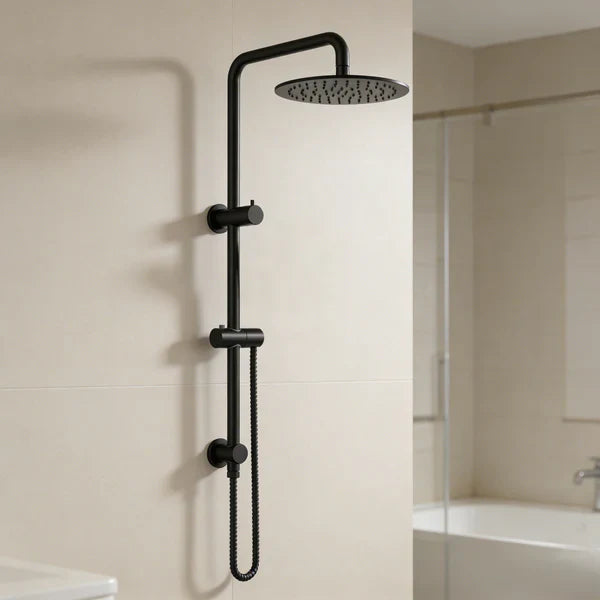
The rain shower (or rainfall shower) gets its name from the sensation it aims to replicate: a gentle, widespread deluge of water that feels like standing in a warm, tropical rain. These typically feature large, flat showerheads mounted directly overhead, delivering a broad, soft stream.
Pros:
-
Luxurious Experience: Offers a supremely relaxing and enveloping shower, akin to a spa.
-
Even Coverage: The wide spray ensures your entire body is thoroughly drenched.
-
Aesthetics: Modern rain showerheads are often sleek, minimalist, and very visually appealing.
Cons:
-
Lower Pressure Sensation: While the flow rate might be high, the wide spread means the impact pressure can feel less powerful than a focused jet.
-
High Water Consumption: The larger head and wider spread can lead to higher water usage.
-
Ceiling Mount Complications: If ceiling-mounted, installation can be more complex, especially during a retrofit.
-
Hair Rinsing: Can sometimes be harder to thoroughly rinse shampoo from long hair due to the diffused spray.
Shower Components and Features to Ponder
Once you've got a handle on the main types, there are still several key components and features to consider that will complete your shower setup. These aren't just minor details; they significantly impact the functionality, aesthetics, and overall user experience.
Shower Heads
Your showerhead is the delivery system for your water, and its choice greatly influences your daily experience. We've touched on rain showers already, known for their wide, drenching spray. But there are also:
-
Standard Showerheads: These come in various sizes and shapes, offering different spray patterns, from focused jets to wide sprays, and often with adjustable settings. They're versatile and widely available.
-
Low-Flow Showerheads: Designed to conserve water without necessarily sacrificing pressure, these are an eco-friendly and cost-saving option, often achieving their efficacy through aeration or smaller, pressurised orifices.
-
LED Showerheads: For a bit of fun or mood lighting, these change colour based on water temperature (or just for show!), adding a unique visual element to your shower.
Consider the material (chrome, brushed nickel, matte black?), the size, and the spray patterns you prefer. Do you want a single, powerful stream or multiple gentle settings?
Shower Doors
The enclosure around your shower space is more than just a splash guard; it defines the look and feel of your bathroom.
-
Framed Doors: Made from thicker, tempered glass with minimal hardware, giving a sleek, contemporary, and open look. They are easier to clean and create a perception of more space, but are typically more expensive.
-
Frameless Doors: Made from thicker, tempered glass with minimal hardware, giving a sleek, contemporary, and open look. They are easier to clean and create a perception of more space, but are typically more expensive.
-
Semi-Frameless Doors: A hybrid, with some framing but less than a fully framed option, offering a balance of aesthetics and cost.
-
Shower Curtains: The most economical and versatile option. Easy to change for a fresh look, but less effective at containing water and can feel less luxurious.
Think about space (do you have room for a pivot door, or do you need a sliding or bifold door?), aesthetics, and ease of cleaning.
Trays and Enclosures
The shower tray is the base of your shower enclosure, designed to collect and drain water. They come in various shapes (square, rectangular, quadrant, offset quadrant) and materials (acrylic, stone resin, composite). Look for:
-
Low Profile/Flush: For a minimalist look and easier access, consider trays that are very shallow or even flush with the floor, replicating a wet room feel without the full waterproofing.
-
Anti-Slip Surface: A crucial safety feature, especially for families or the elderly.
The enclosure itself refers to the glass panels that form the walls of your shower. These come in various configurations to suit your bathroom layout, corner enclosures, alcove setups, or freestanding units. Always ensure it's made from tempered safety glass for durability and safety.
Valves and Controls
We've already touched on thermostatic and mixer valves, which are the heart of your shower's temperature control. But there are also:
-
Concealed Valves: Where the main working parts are hidden behind the wall, leaving only minimalist controls exposed. This creates a very clean, uncluttered look.
-
Exposed Valves: Where the valve unit is mounted directly onto the tiled wall. Easier to install and maintain, and can sometimes add a traditional or industrial aesthetic.
-
Diverters: If you have multiple outlets (like an overhead shower and a handheld), a diverter allows you to switch between them.
Consider the number of outlets you want to control, the desired aesthetic, and ease of installation/maintenance.
Making Your Choice: A Step-by-Step Guide
Feeling a bit more clarity now? Good! Let's pull all this information together into a practical, step-by-step guide to help you confidently select your perfect shower.
Step 1: Budget
This is often the first and most practical filter. Be realistic about what you're willing to spend. Remember, it's not just the cost of the shower unit itself, but also installation, plumbing modifications, tiling, and potentially electrical work.
-
Entry-Level (e.g., basic electric or mixer with curtain): Often the most budget-friendly, focusing on functionality.
-
Mid-Range (e.g., thermostatic mixer with framed enclosure): Offers a good balance of features, reliability, and aesthetics.
-
High-End (e.g., digital shower, wet room, body jets): Represents a significant investment but delivers superior performance, luxury, and design.
Having a clear budget will help you narrow down your options immediately, preventing you from falling in love with something completely out of your price range, a common pitfall!
Step 2: Space Availability
As we discussed, your bathroom's physical dimensions are non-negotiable.
-
Small Bathrooms: Consider shower baths, compact quadrant enclosures, or perhaps a cleverly designed walk-in if you can manage splashing.
-
Medium Bathrooms: More flexibility, you might fit a dedicated shower enclosure or a smaller walk-in.
-
Large Bathrooms: The world is your oyster! Consider a spacious walk-in, a wet room, or even multiple showerheads/jets.
Accurately measure the available space, paying attention to ceiling height, door swings, and proximity to other fixtures. A floor plan sketch can be incredibly helpful.
Step 3: Water Pressure and System Compatibility
This is perhaps the most crucial technical aspect. Your existing water system dictates what kind of shower will perform best.
-
Gravity-Fed System (cold tank in loft, hot tank in airing cupboard): Often results in lower pressure. You might need an electric shower, a power shower with a pump, or an unvented cylinder upgrade for better pressure.
-
Combi Boiler (instant hot water): Generally offers good mains pressure for mixer or digital showers.
-
Unvented Hot Water Cylinder (high pressure, large volume): Excellent for high-pressure mixer, thermostatic, or digital showers.
Test your water pressure. Many plumbers can do this, or you can buy a simple pressure gauge. Knowing your pressure (measured in bars) and flow rate (litres per minute) is vital for choosing a shower that won't leave you feeling disappointed. Don't overlook this; it's the difference between an invigorating spray and a miserable trickle!
Step 4: Aesthetics and Design
Once functionality and practicality are addressed, it's time to let your personal style shine.
-
Modern/Minimalist: Think frameless glass, concealed valves, sleek rain heads, matte black or brushed finishes.
-
Traditional/Classic: Exposed chrome valves, ceramic handles, perhaps a more ornate showerhead design.
-
Industrial/Urban: Exposed pipework (where appropriate), dark metal finishes, concrete-effect tiles.
Consider how the shower fits with your overall bathroom decor, tile choices, and other fixtures. Do you want it to be a focal point or blend seamlessly into the background?
Step 5: Accessibility Needs
Thinking about accessibility isn't just for those with current mobility issues; it's smart long-term planning for your home.
-
Easy Access: Walk-in showers and wet rooms offer barrier-free entry.
-
Support: Consider grab rails (which can be surprisingly stylish!), a fold-down shower seat, or a handheld shower head.
-
Temperature Control: Thermostatic showers are a must for safety, preventing scalding.
Even if you don't need these features now, incorporating some elements can make your bathroom more comfortable and versatile for guests or for your future self.
Step 6: Maintenance and Cleaning
Let's be honest, no one loves cleaning the bathroom. So, choose a shower that won't become a nightmare to maintain.
-
Glass Protection: Look for shower glass with easy-clean coatings that repel water and soap scum.
-
Minimal Grout: Fewer grout lines in a walk-in or wet room mean less scrubbing.
-
Removable Parts: Some showerheads have rubber nozzles that are easy to wipe clean to prevent limescale buildup.
-
Finishes: Matte finishes often show water spots less than high-shine chrome.
Consider your tolerance for cleaning. A design that looks fabulous but requires hours of scrubbing every week might quickly lose its appeal.
Common Mistakes to Avoid When Choosing Your Shower
You've got the roadmap, but let's quickly flag some common potholes to steer clear of:
-
Ignoring Water Pressure: This is probably the biggest offender. A beautiful shower won't perform if your water system can't support it.
-
Underestimating Installation Costs: The unit price is just the beginning. Factor in plumbing, tiling, waterproofing, and electrical work.
-
Not Measuring Accurately: A few inches can make the difference between a comfortable space and a cramped one.
-
Prioritising Aesthetics Over Functionality: A stunning shower that doesn't actually work well is just a very expensive piece of art.
-
Forgetting Ventilation: Showers create moisture. Without proper ventilation (extractor fan), you're inviting mould and mildew.
-
Going Too Trendy: While it's great to be modern, avoid hyper-specific trends that might look dated in a few years. Opt for timeless designs where possible.
-
DIY Installation (unless you're a pro): Shower installation, especially with water and electricity involved, is best left to qualified professionals.
It's Time to Choose Your Ideal Shower!
From the instant gratification of an electric shower to the luxurious embrace of a wet room, and everything in between, you now have a comprehensive understanding of the shower landscape.
By following this guide and carefully considering each step, whether it's your personal style, available space, technical details, or long-term maintenance, you’re no longer guessing. You’re making a well-informed decision that will transform your daily routine and elevate your home.
So go ahead, measure, reflect, and choose with confidence. Your perfect shower is out there, ready to enhance your everyday moments. For more inspiration and top-quality bathroom and kitchen solutions, visit Luxern Home, your trusted supplier for all types of showers and more. If you have any specific questions about fitment, feel free to contact us directly.
Share: