
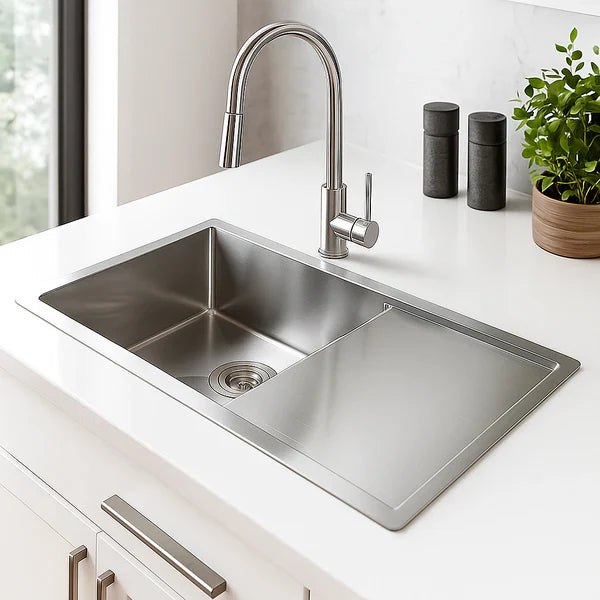
Imagine your kitchen as the heart of your home. If that’s true, then the sink is arguably one of its hardest-working organs. From rinsing vegetables and filling pots to washing dishes and even providing a quick drink, your sink is in constant use. It's not just a basin; it's a critical workstation that influences everything from meal prep efficiency to cleaning ease.
Why Your Sink Choice Matters
Think about it: how many times a day do you approach your sink? Probably more than you realise. A poorly chosen sink can lead to endless frustration, splashes, difficult cleaning, or an aesthetic mismatch that throws off your entire kitchen vibe. Conversely, the right sink seamlessly integrates into your workflow, enhances your kitchen's look, and makes daily chores a little less… chore-like. The choice between an undermount and a top-mount isn't merely about style; it's about making a practical decision that will impact your kitchen's performance and your satisfaction for years to come.
Undermount vs. Top-Mount: What's the Real Difference?
At their core, the distinction between undermount and top-mount sinks lies in how they are installed relative to your countertop. It's a fundamental difference that cascades into varying aesthetics, functional benefits, and potential drawbacks.
An undermount sink is installed beneath the countertop. This means the rim of the sink is flush with the underside of the countertop material, creating a smooth, uninterrupted surface from the counter directly into the basin. There’s no visible lip resting on the counter.
A top-mount sink, also known as a drop-in sink or self-rimming sink, is installed into an opening in the countertop from above. Its rim rests on top of the countertop surface, creating a visible edge or lip around the perimeter of the sink.
Visualising the Installation
To visualise this, imagine a swimming pool. An undermount sink is like an infinity pool edge, where the water flows seamlessly over the edge into a hidden trough. Your countertop acts like that sleek, uninterrupted deck.
Now, imagine a hot tub that’s been placed directly on a patio, with its rim clearly visible above the ground. That’s your top-mount sink. The edges of the hot tub are the visible rim resting on your countertop. This visual helps to immediately grasp the primary aesthetic and functional difference each installation style offers.
The Case for the Undermount Sink
The undermount sink has surged in popularity, largely due to its contemporary appeal and streamlined functionality. It's the go-to choice for many modern kitchen designs, offering a clean look that speaks of sophistication.
Pros of Undermount Sinks
The benefits of an undermount sink are compelling, particularly for those who value aesthetics and ease of cleaning.
-
Uninterrupted Countertop Space:
With no rim projecting above the surface, you get a continuous flow from your counter directly into the sink. This is not only visually appealing but also incredibly practical. You can effortlessly sweep crumbs, spills, and water straight into the sink without encountering an obstruction. Imagine pushing onion peels directly off the counter into the disposal or wiping a wet sponge from the counter's edge and rinsing it in one smooth motion. This significantly simplifies cleanup and enhances food prep efficiency, making it a perfect match for a freestanding design or those looking to maximise bench space. -
Modern Aesthetic:
This seamless integration also contributes to a cleaner, more modern look. Undermount sinks make a kitchen feel more expansive and uncluttered. They allow your beautiful countertop material, whether it's granite, quartz, or solid surface, to take centre stage, becoming an uninterrupted visual feature. This sleek design aligns perfectly with minimalist and contemporary trends, giving your kitchen a high-end, custom appearance. The stainless steel undermount sink, in particular, is a favourite choice for its sleek look and practicality. -
Hygienic and Easy to Clean:
The lack of an exposed rim means there’s no crevice for dirt, grime, or food particles to accumulate around the sink’s edge. This eliminates a common trouble spot for mildew and bacteria growth seen in top-mount designs. Cleaning is easier; often, a quick swipe with a cloth is all it takes to keep the area pristine. -
Enhanced Resale Value:
Finally, undermount sinks are often associated with high-quality countertop materials and a more luxurious kitchen design. This can potentially add value to your home, signalling a well-appointed and thoughtfully designed space to prospective buyers. In many Australian kitchens, this kind of finish is a desirable feature that can elevate the overall look of the space.
Cons of Undermount Sinks
While the advantages are clear, undermount sinks do come with their own set of considerations.
-
Higher Installation Cost:
One of the most significant drawbacks is the higher cost of installation. Undermount sinks require precise cuts in the countertop and specialised mounting techniques (often involving strong adhesives and clips). As a result, labour costs are typically higher than for top-mount kitchen sinks. This is generally not a DIY project unless you have advanced plumbing and carpentry skills. -
Limited Countertop Material Choices:
Undermount sinks require solid surface countertops like granite, quartz, marble, or solid surface materials. They are not suitable for laminate countertops because the raw particleboard core of laminate would be exposed to water at the cut edge, leading to swelling and damage over time. This can limit your countertop options and potentially affect your budget or design vision. -
Vulnerability of the Countertop Edge:
Another consideration is the exposed edge of the countertop around the sink opening. While it's usually precisely cut and polished, this edge can be more susceptible to chipping if a heavy pot or pan is dropped on it. While this is rare, it's something to keep in mind, especially in high-traffic kitchens. -
Potential Difficulty of Replacement:
Finally, if an undermount sink ever needs to be replaced, it can be a more involved and costly process. Since the sink is securely glued and clipped to the underside of the counter, removing it may risk damaging the countertop itself, requiring professional intervention. This can be an issue for those who might want to change their sink style or tapware down the line, as it often requires dismantling the entire setup.
The Case for the Top-Mount Sink
The top-mount sink, with its familiar drop-in design, has been a kitchen staple for decades. It's the workhorse of sinks, offering a robust and practical solution that suits a wide range of budgets and kitchen styles.
Pros of Top-Mount Sinks
The enduring popularity of top-mount sinks is a testament to their clear advantages, particularly in terms of versatility and cost-effectiveness:
-
Ease of Installation and Lower Cost:
One of the most compelling benefits is the ease of installation. Top-mount sinks simply drop into a pre-cut hole in the countertop, with the rim resting on the counter to hold the sink in place. This simpler process translates into lower labour costs, making it a more budget-friendly option. It's also a more feasible choice for DIY enthusiasts. -
Versatility with Countertop Materials:
Top-mount sinks are compatible with virtually any countertop material, including laminate, solid surface, tile, and stone. The sink’s rim covers the raw edge of the countertop cutout, protecting materials like laminate from water damage. This flexibility allows you to choose the best countertop for your needs without worrying about sink compatibility. -
Durability and Protection for Countertops:
The rim of the sink acts as a buffer, protecting the cut edge of the countertop from potential chips or impacts from dropped items. This added layer of durability is especially valuable in high-traffic kitchens, where accidents happen frequently. -
Simpler Replacement Process:
If a top-mount sink needs to be replaced, the process is generally straightforward. Unclipping or unscrewing the sink and lifting it out is usually much simpler than removing an undermount sink, which can save time and money on future maintenance or upgrades. This ease of replacement is a practical consideration for those who may want to update their tapware or sink style in the future.
Cons of Top-Mount Sinks
While practical, top-mount sinks do have certain characteristics that some homeowners find less desirable:
-
Visible Rim:
The most common complaint is the visible rim that rests on the countertop. This creates a slight lip, interrupting the smooth flow of the countertop. It also makes it difficult to sweep crumbs or liquids directly into the sink without them catching on the edge. Over time, this rim can accumulate dirt, grime, and food particles, requiring more frequent cleaning to prevent mildew or discolouration in the caulk line. -
Less Sleek Aesthetic:
Aesthetically, the visible rim is often seen as less modern or sleek compared to the seamless look of an undermount sink. While there are many contemporary top-mount designs, the inherent nature of the installation means it won't achieve the continuous surface look of an undermount, which may not fit with ultra-modern or minimalist kitchen designs. -
Exposed Caulk Line:
The exposed caulk line around the rim can degrade, crack, or discolour over time. This requires periodic re-caulking to maintain a watertight seal and keep the sink looking clean. If neglected, a compromised caulk line can allow water to seep underneath the rim, potentially causing damage to the countertop or cabinet below. This is a common issue for stainless steel sinks, where the caulk can deteriorate faster with regular use and cleaning. -
Perceived as Less High-End:
Finally, some people perceive top-mount sinks as less "high-end" or custom compared to undermount sinks. While this is largely a matter of personal taste, it's something to consider if you're aiming for a luxury kitchen feel.
Making Your Decision: Factors to Consider
With the pros and cons laid out, it's time to weigh these points against your specific needs and desires. Choosing between an undermount and a top-mount sink isn't about finding a universally "better" option; it's about finding the right option for you.
1. Your Budget
Budget is often the first and most practical filter. Remember, it’s not just the cost of the sink itself, but the total installed cost. Undermount sinks typically have higher installation labour costs due to the precision required and the specialised mounting hardware. They also necessitate more expensive countertop materials (stone, quartz, solid surface), which further increases the overall project budget.
Top-mount sinks, on the other hand, are generally less expensive to install and are compatible with a wider range of countertop materials, including more affordable options like laminate. If your budget is tighter, or if you’re looking for a cost-effective solution, a top-mount sink combined with a mid-range countertop will likely be the more economical choice.
2. Your Countertop Material
This is non-negotiable. If you're set on a laminate countertop, an undermount sink is simply not an option due to water exposure at the raw edges. Top-mount is your only viable choice here.
If you’re planning on granite, quartz, marble, or solid surface, then both options are on the table. However, an undermount sink will beautifully showcase the continuous expanse of these premium materials. If you already have existing countertops, this factor might dictate your sink choice entirely. You can browse our collections to find materials that match your vision.
3. Your Lifestyle and Cleaning Preferences
How do you use your kitchen, and how fastidious are you about cleaning? If you're a busy cook who values swift cleanup, the ability to sweep messes directly into an undermount sink is a significant advantage. The lack of a rim means fewer nooks and crannies for grime to hide, making daily wiping a breeze.
If you don't mind a bit of extra effort to scrub around a rim or periodically re-caulk, a top-mount sink might not bother you. Consider how often you're willing to deep clean, and how important a spotless, uninterrupted surface is to your daily routine. Families with young children, for example, often appreciate the spill-friendly nature of an undermount.
4. Your Kitchen's Aesthetic and Overall Design
What's the overarching style of your kitchen? Is it sleek, modern, and minimalist? An undermount sink will complement this aesthetic perfectly, reinforcing clean lines and an uncluttered feel. It allows your countertop to be the star.
If your kitchen has a more traditional, farmhouse, or eclectic vibe, a top-mount sink can blend in beautifully. There are many stylish top-mount options that enhance these designs. Sometimes, the visible rim adds a comforting, classic feel. Think about how the sink integrates with your cabinetry, backsplash, and fixtures to achieve a harmonious look.
5. Your DIY Comfort Level (or Your Installer's Expertise)
Are you planning to install the sink yourself? A top-mount sink is generally a much more approachable DIY project for a handy homeowner. The process is simpler, and there’s less risk involved with cutting the countertop or securing the sink.
For an undermount sink, professional installation is almost always recommended. The precision required for the countertop cutout, the proper sealing, and the secure mounting can be complex. At Luxern Home, we have years of expertise, and you can learn more about us and our commitment to quality. If you’re hiring a professional, ensure they have experience with undermount installations. This factor impacts both cost and the potential for future issues if not done correctly.
Final Thoughts: No Wrong Answer, Just the Right One for You
Both undermount and top-mount sinks are great choices, each with its own benefits. If you’re after a sleek, modern look and don’t mind the extra investment, an undermount sink is perfect for a minimalist design. If you prefer a more budget-friendly, versatile option that’s easy to install, a top-mount sink will be a reliable workhorse for years.
Consider your budget, kitchen design, and how you’ll use the sink daily. Once you've weighed your options, you’ll be ready to choose the sink that best fits your needs.
Need help deciding? Visit Luxern Home to explore both undermount sink vs top mount sink options and find the ideal sink for your kitchen renovation.
Share: