
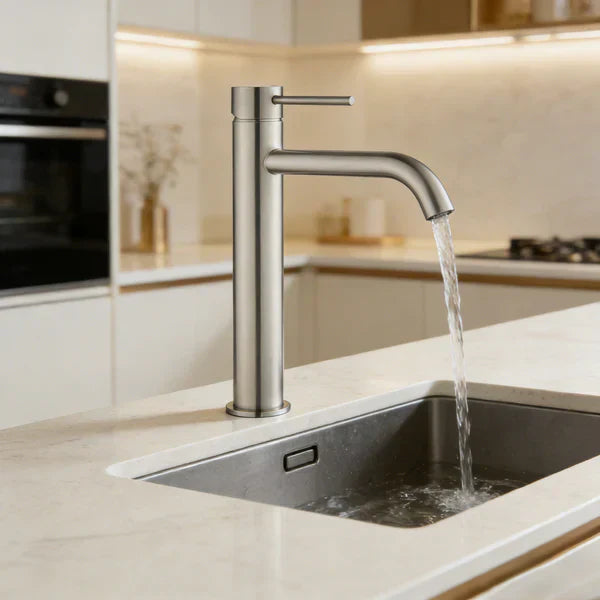
Choosing bathroom tapware or kitchen tapware fixtures is often the "jewellery" phase of a renovation. It is the final flourish that pulls a kitchen or bathroom together, but it is also one of the most functional decisions you will make. While you might be tempted to choose based on a quick glance at a showroom display, the choice between brushed nickel and chrome carries long-term implications for your cleaning routine, your budget, and the overall "temperature" of your kitchen design and home’s interior.
Understanding the Basics: Why Your Tapware Finish Matters
When you walk into a room, your eyes naturally gravitate toward points of light. In a bathroom or kitchen, those points are almost always the metallic surfaces of your faucets, bath fillers, showerheads, and towel rails. The finish you choose dictates how light behaves in the room, whether it bounces off with a crisp, mirror-like intensity or softens into a muted, velvety glow.
The Visual Impact of Metallic Finishes
Finishes are more than just colours; they are moods. A high-shine finish can make a small, dark bathroom feel more energetic and spacious by reflecting every available lumen. Conversely, a matte or textured finish can ground a large, sterile kitchen, adding a sense of organic warmth. If your cabinetry and tiles are the canvas, your tapware is the signature that defines the style, be it industrial, traditional, or ultra-modern.
The Role of Durability in Wet Environments
Beyond the looks, tapware lives a hard life. It is subjected to constant moisture, fluctuating temperatures, caustic cleaning agents, and the oils from our skin. A finish isn't just a decorative layer; it is a protective barrier for the brass, antique brass, or stainless steel underneath. Choosing the wrong bathroom tapware finishes for your lifestyle, such as a high-maintenance shine in a household with three toddlers, can turn a beautiful fixture into a source of daily frustration.
What is Chrome Tapware?
Chrome has been the undisputed king of the plumbing world for decades. If you walk into any hardware store, the sea of silver you see is likely chrome. It is the "default" for a reason, offering a combination of affordability, being easy to clean, and a timeless, clean look that fits almost any architectural era.
How Chrome Is Made
Chrome finishes are created through a process called electroplating. A thin layer of chromium is bonded to a base metal, usually brass or zinc. Because chromium is naturally very hard and resistant to corrosion, it creates a formidable shield. This process results in a surface that is incredibly smooth and non-porous, which is why it has that signature "wet" look even when it’s bone dry.
The Aesthetic: Cool, Classic, and Bright
Chrome is characterised by its cool, blue undertones. It is a "true" silver that reflects colours around it without distorting them. This makes it an excellent choice for modern, minimalist spaces or classic white-tiled bathrooms. It feels clinical in the best way possible, sanitary, bright, and polished. It communicates a sense of order and cleanliness that few other finishes can match.
What is Brushed Nickel Tapware?
If chrome is a crisp, starched white shirt, brushed nickel is a soft, cashmere sweater. It has surged in popularity over the last decade as homeowners have moved away from the "all-white" minimalist trend toward "warm minimalism" and transitional design.
The Manufacturing Process
While nickel is also applied via plating, the "brushed" element comes from a physical treatment of the surface. Manufacturers use a wire brush or a similar abrasive tool to create millions of tiny, microscopic scratches in the metal. This "brushes" the shine away, leaving a soft, satin-like texture. Most high-quality brushed nickel today is also treated with a Physical Vapour Deposition (PVD) coating, which is a high-tech process that makes the finish incredibly hard and resistant to wear.
The Aesthetic: Warm, Textured, and Subtle
The standout feature of brushed nickel is its golden or brownish undertone. It is significantly warmer than chrome. Instead of reflecting light like a mirror, it diffuses it, creating a soft glow. This makes it feel more "lived-in" and artisanal. It pairs beautifully with natural materials like wood, marble, and earth-toned tiles, lending a sophisticated, understated elegance to a room.
Head-to-Head Comparison: Chrome vs. Brushed Nickel
To decide which finish deserves a place in your home, we need to look at how they perform in the trenches of daily life.
1. Aesthetic Appeal and Interior Style
Chrome is the chameleon. It works in a 1920s Art Deco bathroom just as well as it does in a 2024 Scandi-style kitchen. It is energetic and sharp. Brushed nickel, however, offers a sense of luxury. It feels more "custom" and less like a standard builder-grade choice. If your home features warm wood floors or brass accents, brushed nickel will bridge those elements together far more effectively than the stark coolness of chrome.
2. Maintenance and Cleaning
This is where the two finishes diverge sharply. Chrome is a magnet for fingerprints, water spots, and dried soap scum. Because the surface is a perfect mirror, every smudge is magnified. If you are someone who hates seeing a single fingerprint on the faucet, chrome will keep you busy with a microfiber cloth.
Brushed nickel is the champion of "hiding the evidence." Its textured surface and matte finish mask water spots and fingerprints effortlessly. For a high-traffic family bathroom, brushed nickel can look clean for days, whereas chrome might look "dirty" just five minutes after a cleaning session.
3. Durability and Longevity
Both are highly durable, but they age differently. Chrome is extremely hard, but because it is so smooth, it is prone to visible "spiderweb" scratching over time if you use abrasive sponges. Brushed nickel is inherently "scratched" by design, so new minor abrasions from daily use simply blend into the existing texture. However, because nickel is a softer metal than chromium, the PVD coating is essential; without it, nickel can tarnish or develop a "milky" patina over many years.
4. Price Point and Value
Chrome is almost always the more affordable option. Because it is produced in such massive quantities and the plating process is straightforward, you can often save 20% to 50% by choosing chrome over brushed nickel. If you are outfitting an entire house on a budget, those savings add up to thousands of dollars. Brushed nickel is considered a "premium" finish, reflecting both the extra labour in the brushing process and the higher cost of the raw material.
5. Availability and Consistency
Chrome is the universal standard. If you buy a chrome faucet from Brand A and a chrome towel rack from Brand B, they will match perfectly. Brushed nickel is much trickier. Every manufacturer has a slightly different "recipe" for their nickel, some are more golden, others more grey, and the "heaviness" of the brushing varies. If you choose brushed nickel, it is usually best to buy all your hardware from the same manufacturer to ensure a cohesive look.
Pros and Cons of Chrome
Affordability and Shine
Chrome is the ultimate "bang for your buck" finish. It looks expensive and high-end because of its brilliant lustre, yet it is the most budget-friendly option on the market. It’s also incredibly easy to find; you’ll never have to worry about a particular style being out of stock or discontinued.
The Downsides: Smudges and Scratches
The high-maintenance nature of chrome is its biggest drawback. It demands constant attention to maintain that "showroom" look. Furthermore, in areas with hard water, calcium deposits (limescale) show up as white, crusty spots that stand out vividly against the blue-silver background.
Pros and Cons of Brushed Nickel
Hiding Spots and Timeless Warmth
Brushed nickel is the "set it and forget it" low-maintenance finish for busy households. It maintains a soft, dignified appearance even between cleanings. It also has a "timeless" quality that feels less tied to a specific decade than high-shine finishes, making it a safe bet for a long-term residence.
The Downsides: Higher Cost and Matching Difficulties
The price tag can be a deterrent for some. Additionally, the frustration of trying to match a brushed nickel showerhead to a different brand’s drain cover can lead to "finish fatigue." You have to be more intentional and organised when shopping for nickel.
How to Choose Based on Your Room Type
Modern Kitchens
In the kitchen, the faucet is likely the most-used tool in the house. If you cook frequently and have "floury hands" or greasy fingers, brushed nickel is a lifesaver. It won't look greasy every time you turn it on. However, if your kitchen has a lot of stainless steel appliances, chrome can sometimes provide a better visual "pop" against the muted steel of the fridge and oven.
Master Bathrooms
The master bath is where you want to feel relaxed. The warm, soft glow of brushed nickel contributes to a spa-like atmosphere. It pairs beautifully with candlelight and warm bathroom lighting, making the space feel cozy rather than clinical.
Powder Rooms
Since the powder room is rarely used for heavy-duty tasks like showering or intensive cooking, you can afford to prioritise style. If you’re on a budget, a high-arc chrome faucet can look incredibly striking against a dark, moody wallpaper, providing a high-contrast focal point without breaking the bank.
Matching Your Existing Hardware
The “Mixed Metal” Trend: Can You Use Both?
Design rules have relaxed significantly. You can mix metals, but it must look intentional. A common designer trick is to keep all "plumbing" (faucets, showerheads) in one finish, like brushed nickel, while using another finish for "decorative" elements like light fixtures or cabinet handles. Mixing chrome and brushed nickel is tricky because they are so close in colour but different in "temperature." It often looks like a mistake rather than a choice. It’s usually better to pair either one with a high-contrast metal like matte black or brushed gold.
The Challenge of Finding Matching Accessories
If you go with chrome, you can buy your toilet paper holder, robe hooks, and mirrors anywhere. If you go with brushed nickel, you are often "locked in" to the brand you started with. Always check the availability of matching bathroom accessories before committing to a nickel faucet.
Longevity and Resale Value: Which Finish Wins?
Trends vs. Timelessness
Chrome is the safest bet for resale because it is neutral. It doesn't offend anyone. However, brushed nickel is currently seen as a "higher-end" upgrade by many homebuyers. While chrome is timeless, brushed nickel and similar brushed finishes are currently the "standard for luxury" in many real estate markets.
Impact on Home Appraisal and Buyer Perception
While a finish won't change your home's appraised value, it does change "buyer perception." Brushed nickel can make a bathroom look like it was renovated recently and with a larger budget, whereas chrome can sometimes feel like a standard "builder's special" if not paired with high-end fixtures.
Maintenance Tips to Make Your Finish Last
Regardless of your choice, how you clean your tapware determines how long it stays beautiful.
Cleaning Chrome Without Scratching
Never use green scrubby pads or abrasive powders on chrome. A simple solution of 50/50 white vinegar and water is the gold standard. Spray it on, let it sit for a minute to dissolve minerals, and wipe it away with a soft microfiber cloth. To get that "mirror" shine, buff it dry with a clean, dry cloth immediately after cleaning.
Preserving the Texture of Brushed Nickel
The goal with brushed nickel is to keep the "valleys" of the brushed texture clean. Use a soft-bristled toothbrush to gently clean around the base of the faucet where grime accumulates. Avoid wax-based polishes, as these can fill in the brushed texture over time and make the finish look dull or "clogged."
Common Chemicals to Avoid for Both Finishes
Avoid anything containing bleach, ammonia, or hydrochloric acid. These chemicals can eat through the protective coatings of both chrome and nickel, leading to permanent pitting or discolouration that cannot be repaired.
Final Verdict: Which Finish Is Right for You?
The choice ultimately comes down to your personality and your household's rhythm.
Choose Chrome if...
-
You are on a strict budget.
-
You love a bright, high-energy, and sterile-clean look.
-
You don't mind a quick daily wipe-down to keep things shiny.
-
You want the easiest possible time matching accessories.
Choose Brushed Nickel if...
-
You want a warmer, more sophisticated feel in your home.
-
You have a busy family and need a finish that hides fingerprints and water spots.
-
You are willing to pay a premium for a "custom" look.
-
You are prepared to buy a coordinated suite of hardware from a single brand.
Frequently Asked Questions
Does Brushed Nickel Rust More Easily Than Chrome?
No. In fact, most modern brushed nickel is finished with a PVD coating that is virtually indestructible under normal conditions. Both finishes are excellent at preventing the underlying brass from rusting. The "rust" people often see on tapware is usually just surface-level mineral deposits from hard water.
Which Finish Is Better for Hard Water Areas?
Brushed nickel is significantly better for hard water. The white calcium deposits left by evaporating water are almost invisible against the muted, textured surface of nickel. On chrome, those same spots look like white stains and are very prominent.
Can I Mix Chrome and Brushed Nickel in the Same Bathroom?
It is generally discouraged. Because they are both "silver-toned" but have different undertones (blue vs. yellow), they tend to clash. It looks as if you tried to match them and failed. If you want to mix finishes, try pairing chrome taps with something vastly different, like matte black tapware or dark bronze taps.
Complete Your Space With the Right Tapware Finish
Whether you prefer the bright, polished look of chrome or the soft, low-maintenance warmth of brushed nickel, the right finish can bring your whole kitchen or bathroom design together. Once you have chosen the style that suits your space, make sure the rest of your fixtures, accessories, and finishes work as one cohesive design.
Explore premium kitchen and bathroom tapware at Luxern Home and find modern fixtures designed to balance everyday function, long-lasting durability, and timeless style.
Share: