
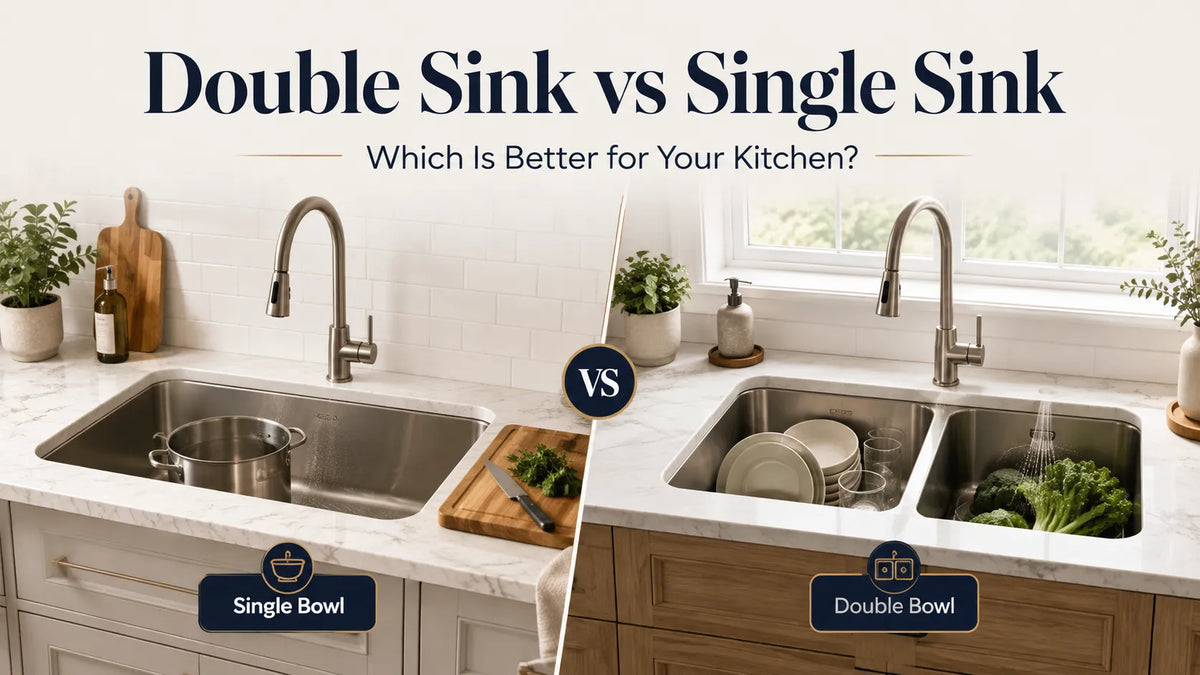
Choosing between a double sink vs single sink setup can change how your kitchen works every day. Both styles have clear benefits, but the right choice depends on your cooking habits, available bench space, dishwasher use and kitchen layout.
If you regularly wash large pots and roasting pans, a single basin may be easier to use. If you often soak dishes, rinse produce and clean up at the same time, a double bowl kitchen sink can make multitasking simpler.
This guide compares single bowl vs double bowl kitchen sinks so you can choose a practical option for your home rather than relying on trends alone.
What Is a Single Bowl Kitchen Sink?
A single bowl sink has one open basin with no centre divider. It gives you a wide, uninterrupted washing area, which is useful for large items, baking sheets and chopping boards. A compact single-bowl kitchen sink can also suit smaller kitchens, bar areas and utility spaces where room is limited.
Single bowl kitchen sinks are common in modern kitchens because they suit simple layouts and can work well with a dishwasher. They are also popular in minimalist kitchens, where a clean benchtop and fewer visual breaks are part of the kitchen design.
Advantages of a Single Bowl Sink
More room for large items. Without a divider, deep pots, trays and long-handled cookware can sit flatter in the sink. That makes washing and soaking awkward items easier.
Simple cleaning. One bowl has fewer edges and joins to wipe around. There is no centre wall collecting water marks or food residue. For ongoing care, Luxern Home's guide on how to clean a kitchen sink covers stainless steel, quartz composite and sintered stone surfaces.
Flexible meal prep. A large single basin can work with accessories such as a cutting board, colanders or a roll-up rack. These create temporary work zones without permanently dividing the sink.
Useful in compact kitchens. A well-sized single bowl can preserve more bench space and counter space than a large double sink. This can matter when every part of the benchtop is used for preparing meals.
Disadvantages of a Single Bowl Sink
No built-in task separation. If you leave dishes soaking in the basin, you may need to empty it before washing produce or draining pasta.
Dirty dishes can take over the sink. When everything shares one bowl, it is harder to keep a clean area free for other jobs.
A drying area may become more important. If the sink has no second bowl, a drying rack or built-in draining board can help keep wet dishes off the benchtop. If you wash dishes by hand, Australian Government guidance also recommends using a plug in the sink rather than leaving the tap running to reduce unnecessary water use.
What Is a Double Bowl Kitchen Sink?
A double bowl kitchen sink has two basins separated by a divider. The bowls may be equal in size, or one may be larger than the other. Common layouts include 50/50, 60/40 and other offset combinations. Luxern Home's double-bowl stainless steel kitchen sink is one example of a larger two-bowl configuration with a built-in drainer.
The main benefit is separation. You can wash in one bowl and rinse in the other, or keep dirty pots and pans away from fresh food prep. This makes a double bowl sink useful for households that wash by hand often or need two sink zones at once.
Advantages of a Double Bowl Sink
Better for multitasking. You can keep dishes soaking on one side while rinsing vegetables on the other. One person can also use one bowl while another keeps working in the second.
A natural wash-and-rinse routine. If you hand-wash most dishes, the two-bowl layout gives you a simple system for washing, rinsing and draining.
More separation during meal preparation. A second bowl can help keep raw food preparation, dirty utensils and clean items apart. Healthdirect recommends keeping raw foods away from other foods, surfaces and utensils to help reduce cross-contamination.
Flexible drying options. Some double bowl kitchen sinks include an integrated drying area or drainboard. Others leave more benchtop space for a removable drying rack.
Disadvantages of a Double Bowl Sink
Less room in each bowl. The centre divider reduces the width of each basin. Wide trays, frying pans and large pans may need to sit at an angle.
More edges to clean. The centre partition adds another surface where water marks and residue can collect.
More planning below the sink. Two wastes and the related plumbing can take up extra storage space in the cabinet. The National Construction Code includes specific sanitary plumbing requirements for kitchen sinks and domestic dishwashers, so the final plumbing layout should suit the fixture and installation. Always check the actual product specification before ordering.
Double Sink vs Single Sink: Quick Comparison
|
Decision factor |
Single bowl sink |
Double bowl sink |
|
Large items |
Best for wide trays, pans and pots |
Can feel restricted by the centre split |
|
Multitasking |
One open work zone |
Two permanent work zones |
|
Dishwasher households |
Often a practical match |
Useful if you still hand-wash often |
|
Hand-washing |
May need a tub or rack for separation |
Good for wash-and-rinse routines |
|
Benchtop space |
Can suit compact layouts |
Larger models may use more space |
|
Cleaning |
Fewer internal edges |
More corners and divider surfaces |
|
Food preparation |
Flexible with accessories |
Easy to separate tasks |
|
Drying area |
Built-in or removable |
Integrated options are common |
Which Sink Is Better for Your Daily Routine?
1. Think About How You Wash Dishes
Your dishwasher habits should influence the choice. If a dishwasher handles most plates, bowls and cutlery, your sink may mainly be used for cookware that needs hand-washing. In that case, the open space of a single bowl can be more useful than a permanent second basin.
Australian Government Energy Rating guidance notes that a modern dishwasher can use less water and energy than hand-washing the equivalent number of dishes when used appropriately. If you hand-wash most items instead, a double bowl kitchen sink may feel more organised because you can wash in one side and rinse in the other without repeatedly clearing the basin.
2. Check Your Cabinet and Benchtop
Do not choose a sink by its outside dimensions alone. Check the internal cabinet width, benchtop cut-out, mounting method, waste position and space needed for plumbing.
A compact kitchen may benefit from a single bowl or small bar sink, especially when preparation space is limited. In a larger kitchen, a double bowl sink can fit comfortably without taking over valuable benchtop space.
The exact fit varies by model, so use the manufacturer's measurements rather than a fixed rule based only on sink width. If installation style is part of the decision, compare the practical differences between an undermount and top-mount sink before finalising the benchtop cut-out.
3. Match the Sink to Your Pots and Pans
Look at the items you wash most often. If your kitchen regularly produces large pots, roasting pans, baking sheets and oversized chopping boards, a single basin is usually easier to work with.
If your cookware is smaller and you value task separation, a double bowl kitchen sink may suit you better. An offset double bowl can also provide one larger side for pots and pans and a smaller side for rinsing or soaking.
4. Consider Food Preparation and Kitchen Hygiene
Both sink styles can support safe preparation when you keep hands, utensils and surfaces clean. Food Standards Australia New Zealand explains that cross-contamination can occur when harmful microorganisms spread between food, surfaces, hands or equipment. A double bowl may make task separation easier, but it does not replace good hygiene.
If you often use the sink for rinsing vegetables, a spare bowl is convenient. With a single bowl, a fitted colander or cutting board can create a separate food prep area above the basin. The NSW Food Authority also recommends separate cutting boards for raw foods and ready-to-eat foods, or thorough cleaning and sanitising between uses.
5. Choose a Sink Material That Fits Your Routine
Bowl configuration is only one part of the decision. Sink material also affects appearance, care and long-term use.
Stainless steel is common because it is durable, practical and suits many kitchen design styles. The Australian Stainless Steel Development Association notes that grade 304 stainless steel has strong corrosion resistance and is suitable for many food-processing environments. Luxern Home's stainless steel kitchen sink collection includes both single and double bowl configurations in a range of sizes.
Fireclay offers a heavier, more traditional look and is often used for farmhouse-style sinks. Granite and quartz composite sinks can provide a softer, more solid appearance. Whatever sink material you prefer, check the care instructions and installation requirements before buying.
What About Drainers, Drainboards and Workstation Sinks?
The choice is not limited to one bowl or two. Other kitchen sinks can solve specific layout problems.
Single Bowl With Draining Area
A single bowl with a built-in drainer gives you an open basin plus a dedicated drying area. This can be useful if you want a single sink but do not want wet dishes sitting directly on the benchtop.
A built-in draining area can also protect surrounding countertops from regular splashes. Some product ranges use the term drainboard for the same or a similar built-in draining surface.
Double Bowl With Drainer
A double bowl kitchen sink with a drainer gives you two work zones and a drying area. It is practical for frequent hand-washing, but it needs enough cabinet and benchtop width. A double bowl sink with an integrated drainer can be useful when you want permanent separation plus a dedicated drying surface.
Workstation Sink
A workstation sink uses an internal ledge to support accessories such as a rinsing basket, a cutting board and drying racks. This lets a large single basin handle several tasks while keeping the main bowl open when needed.
For households that want multitasking without a fixed divider, this can be a useful middle ground.
Bar Sink or Secondary Sink
A compact bar sink can support a main kitchen sink in larger layouts, but it is usually not a substitute for the main washing area. It can be useful for drinks, light rinsing or a secondary prep zone.
Single or Double Sink: Which Should You Choose?
Choose a single bowl sink if you:
-
regularly wash large pots, trays or oven sheets
-
use a dishwasher for most everyday dishes
-
want a wide, open basin
-
have limited bench space
-
prefer a simple look for modern or minimalist kitchens
Choose a double bowl kitchen sink if you:
-
hand-wash dishes often
-
want to soak dishes while keeping one bowl free
-
regularly need two sink tasks at the same time
-
prefer clear separation between washing and meal preparation
-
have enough cabinet and benchtop space for two useful bowls
There is no universal winner in the double sink vs single sink debate. The best kitchen sinks are the ones that fit your real routine, not just the showroom display.
Before buying, measure the cabinet, check the cut-out and compare the internal bowl dimensions with your largest cookware. Then consider your preferred sink material, drainer setup, tap position and storage space below the sink. When choosing tapware, the Australian Government's WELS scheme lets you compare tap water-efficiency ratings, while Luxern Home's kitchen tap buying guide can help with style, pressure and functionality.
Once those practical details are clear, it becomes much easier to choose a sink that works naturally with your kitchen layout and the way you cook, clean and prepare food every day. Explore the Luxern Home kitchen sink range to compare available single- and double-bowl options, sizes and finishes.
Share: