
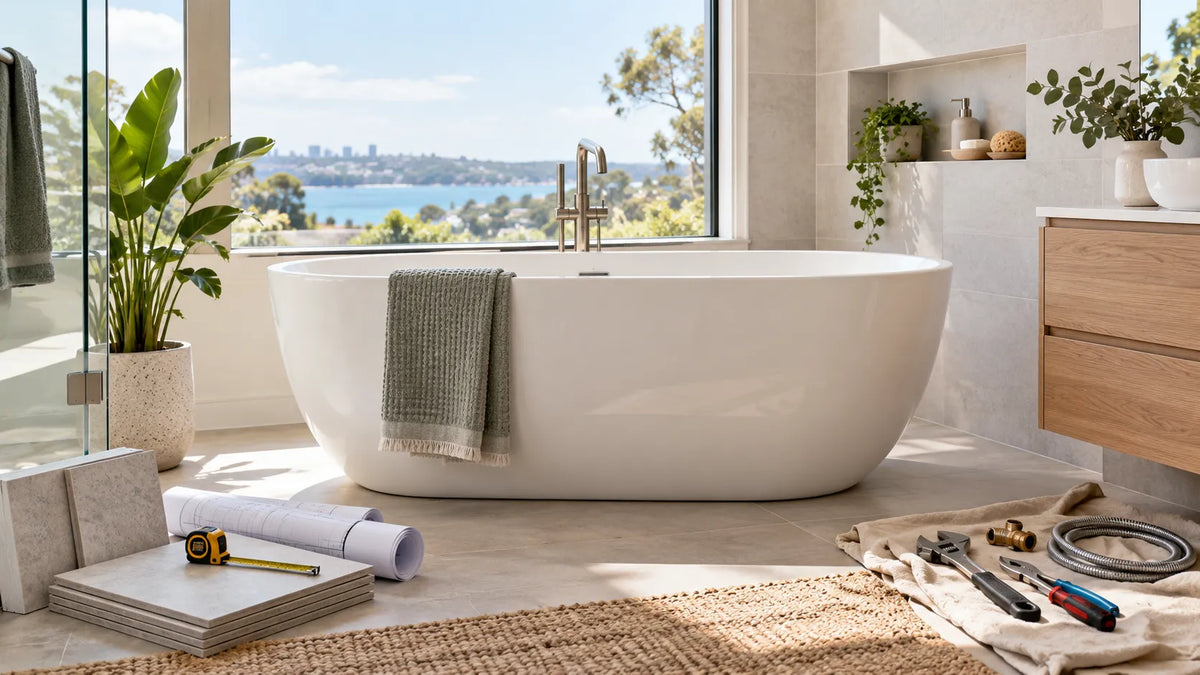
If you are planning a bathroom renovation, knowing the bathtub installation cost early can make budgeting much easier.
The final price is not just the cost of the bath. Plumbing, waterproofing, tiling, labour, removal of the old bath and changes to the bathroom layout can all affect what you pay.
A straightforward replacement using the existing plumbing may be relatively affordable. Moving the bath to another part of the room, installing a heavy stone bath or adding new tapware can push installation costs much higher.
This guide explains the main costs involved in installing or replacing a bathtub in Australia and what to consider before asking tradespeople for quotes.
How Much Does Bathtub Installation Cost?
There is no single price for bath installation because every bathroom is different.
As a general guide, a straightforward like-for-like replacement may cost around $1,500 to $3,500, depending on the bathtub, access and amount of plumbing work required. A more involved installation with relocated plumbing, new tiles, waterproofing or structural work may cost $3,500 to $7,000 or more.
Complex installations involving an inset bath, spa bath, custom surround, extensive carpentry or electrical work can cost considerably more.
Australian plumbing prices also vary by location and job complexity. Current Australian plumber cost guidance from hipages shows that bath installation is only one component of the overall plumbing bill, particularly when drainage or tapware also needs to be changed.
Treat these figures as budgeting guides rather than fixed prices. The most accurate way to establish the cost to install a bathtub is to have the bathroom inspected and obtain an itemised quote.
Bathtub Installation Cost Breakdown
Several parts of the project determine the final price.
|
Cost area |
What can affect the price |
|
Bathtub |
Material, size, style and weight |
|
Plumbing |
Existing drain position, water connections and plumbing upgrades |
|
Labour |
Number of tradespeople and complexity of the work |
|
Waterproofing |
Condition of the existing wet area and extent of new work |
|
Tiling |
Number and type of tiles, preparation and finishing |
|
Removal |
Size, weight and accessibility of the existing bath |
|
Carpentry |
Framing, supports or subfloor repairs |
|
Electrical work |
Usually relevant to spa baths or powered features |
|
Tapware |
Floor-mounted fillers, wall-mounted mixers or mixer taps |
The bath itself can therefore be only one part of your total bathtub installation costs.
If you are still deciding which style suits your space, Luxern Home's bathtub collection provides a useful starting point for comparing shapes, sizes and materials.
Bathtub Replacement Cost vs New Installation
Replacing a bath in the same position is usually the most economical option.
If the new bath has a similar footprint and the drain, waste and tapware remain in the same locations, the plumber may be able to reuse much of the existing plumbing.
This reduces both plumbing costs and labour.
A completely new installation is different. Moving the bathtub may require drainage to be rerouted beneath the floor, new water lines, additional waterproofing and replacement floor tiles.
That can involve a licensed plumber, tilers, a waterproofer and sometimes an electrician or carpenter.
If budget is important, keeping the new bath close to the existing plumbing is one of the simplest ways to control the bathtub replacement cost.
For a clearer understanding of what the installation itself involves, see Luxern Home's guide to how to install a new bathtub.
How Bathtub Type Affects Installation Costs
Your chosen tub type can make a noticeable difference to the overall project.
Acrylic Bathtubs
Acrylic is one of the most common choices for Australian bathrooms.
Acrylic tubs are relatively lightweight, which makes moving and positioning them easier than heavier materials. They are also available in a wide range of shapes, including freestanding, corner and back-to-wall designs.
Because less structural reinforcement is generally required, acrylic can help keep labour costs manageable.
Fibreglass-reinforced acrylic is also commonly used to improve strength without making the bath excessively heavy.
Freestanding Baths
A freestanding bath creates a strong visual feature and works particularly well in larger bathrooms.
However, installation costs can rise if the floor waste or tapware needs to be moved. A freestanding bathtub positioned away from the wall may require a floor-mounted bath filler or carefully positioned wall-mounted mixer.
If the plumbing is already in the correct position, installation can be much simpler.
You can compare different freestanding bathtubs to understand the available sizes before finalising your bathroom layout.
Back-to-Wall Baths
A back-to-wall bath offers a similar appearance to a freestanding tub but sits directly against the wall.
This can be useful in bathrooms where space is limited. The wall position can also make cleaning easier and may simplify the placement of tapware.
Costs still depend on the position of the waste and existing plumbing, but a back-to-wall design can sometimes avoid the extra floor space required around a traditional freestanding bath.
Inset and Drop-In Baths
An inset bath, sometimes called a drop-in bath, is installed within a frame or hob.
The bath itself can be economical, but additional work may be required to build the surround, waterproof the area and finish it with tiles.
As a result, the installation can involve more carpentry and tiling than placing a simple freestanding bath.
Stone and Cast Iron Baths
Natural stone, solid-surface and cast iron baths can be considerably heavier than acrylic bathtubs.
Before choosing one, confirm that the floor structure can safely support the combined weight of the bath, water and user.
Extra labour may also be required simply to move a heavy stone bath through the property and position it safely.
If you are comparing materials, Luxern Home's bathtub materials guide explains how different options affect weight, maintenance and everyday use.
Plumbing Labour and Other Trades
Plumbing is one of the most important components of a bathtub installation.
A licensed plumber may need to:
-
disconnect and remove existing plumbing
-
connect the new bath waste
-
adjust drainage
-
install or reposition mixer taps
-
connect the bath spout
-
test the installation for leaks.
Plumbing requirements vary between Australian states and territories. For example, NSW requires appropriate licensing for plumbing and drainage work regardless of the value of the job. Homeowners can review the NSW Government plumbing and drainage licensing requirements when planning work in NSW.
Depending on the scope, other tradespeople may also be required.
Tilers may need to replace damaged tiles or finish an inset bath surround. A carpenter may be needed for framing or subfloor repairs. An electrician may be necessary if you are installing a spa bath or another bath with powered components.
Recent Australian bathroom renovation pricing data also shows how quickly labour can become a significant part of the project once several trades are involved. See the Australian bathroom renovation labour cost guide for broader market context.
Waterproofing and Tiling Costs
Waterproofing should not be treated as an optional extra.
Baths sit within a wet area, and the surrounding surfaces need to manage water correctly. The exact requirements depend on the type of bath and surrounding construction.
For example, the National Construction Code includes specific waterproofing and water-resistance requirements for areas adjacent to baths and spas. You can review the NCC wet-area waterproofing requirements for further information.
If an old bath is removed and the existing waterproofing is damaged, further preparation may be required before the new bath can be installed.
Tiling costs can also increase when:
-
old tiles need to be removed
-
the substrate requires repair
-
natural stone or large-format tiles are used
-
an inset bath needs a tiled surround
-
the floor level or layout changes.
A simple freestanding tub positioned on finished floor tiles will generally involve less surrounding tiling than a fully tiled inset bath.
Hidden Costs to Allow For
The most expensive surprises often appear after the old bathtub has been removed.
Water Damage
Leaks around an older bath can damage flooring, wall framing or surrounding surfaces without being immediately visible.
If damaged timber or flooring is found during demolition, repairs should be completed before the new bath is installed.
Plumbing Upgrades
Older pipes, poorly positioned drainage or incompatible fittings may need to be replaced.
Moving the waste even a relatively short distance can increase plumbing costs because access beneath the floor may be required.
Old Bathtub Removal
Removing a lightweight acrylic bath is usually easier than removing a heavy cast iron or stone bath.
Access can also affect the quote. Narrow doorways, stairs and apartment buildings can all increase the amount of labour needed.
Call-Out Fees
Some plumbers charge a call-out fee in addition to their hourly or fixed installation price.
Ask whether this is included when comparing quotes so that you are comparing like with like.
Asbestos
Older Australian bathrooms can contain asbestos in wall sheeting, backing materials and other building products.
Queensland Government asbestos guidance notes that homes built before 1990 have a higher likelihood of containing asbestos materials, including in wet areas such as bathrooms. Before disturbing suspicious materials, refer to the home renovation asbestos guidance and the applicable rules in your state or territory.
Allowing a contingency in your renovation budget can make these unexpected issues easier to manage.
Does Tapware Affect the Cost?
Yes. The type and location of your tapware can affect both product and installation costs.
A bath positioned against a wall may work with wall-mounted mixer taps and a bath spout. A freestanding tub placed away from the wall may require a floor-mounted bath filler.
Changing the tapware position can require additional plumbing inside the wall or beneath the floor.
Before purchasing the bath, check how the waste and tapware will align with your bathroom plan. You can also compare Luxern Home's tapware options while planning the layout.
How to Keep Bathtub Installation Costs Down
You do not necessarily need to choose the cheapest bathtub to control your budget.
The biggest savings usually come from reducing unnecessary building and plumbing work.
Keep the existing bath position where possible. Reusing the current waste and water locations can reduce the amount of plumbing required.
Measure carefully before purchasing. A bath that does not fit correctly can create avoidable changes to walls, tiles and plumbing. Luxern Home's standard bathtub size guide can help when checking common dimensions.
Choose the bath before finalising the plumbing. Your plumber needs the product specifications, waste position and tapware arrangement before rough-in work begins.
Ask for an itemised quote. It should clearly state what is included for removal, plumbing, waterproofing, tiling, labour and disposal.
It is also sensible to keep a contingency for hidden damage or additional work uncovered during demolition.
Questions to Ask Before Hiring an Installer
Before accepting a quote, ask:
-
Are the required licences current?
-
Is removal of the existing bathtub included?
-
Is the quote fixed or based on hourly labour?
-
Is there a separate call-out fee?
-
Are plumbing materials included?
-
Who will handle waterproofing and tiling?
-
Does the quote include testing for leaks?
-
What happens if water damage is found?
-
Will additional plumbing upgrades require approval before work continues?
-
Is cleanup and disposal included?
Getting these details in writing makes it much easier to compare quotes accurately.
Is Bathtub Installation Part of a Full Bathroom Renovation?
Sometimes.
If you are only replacing an existing bath with a similar model, the project may remain relatively contained.
However, changing the room layout, replacing floor tiles, installing new tapware, changing the shower area or completing major waterproofing can quickly turn the job into a broader bathroom renovation.
That is why bathroom renovation costs should not be confused with the cost of the bathtub alone.
When several fixtures are being replaced, coordinating the work together can sometimes be more practical than arranging separate plumbers, tilers and other trades at different times.
Final Thoughts
Bathtub installation cost depends on much more than the price of the bath itself. The type of bathtub, plumbing position, labour, waterproofing, tiles, tapware, access and condition of the existing bathroom all affect the final quote.
For the lowest-cost installation, keeping the existing layout and choosing a bath that suits the current plumbing is usually the simplest approach. Freestanding, back-to-wall, inset and stone baths can all work well, but each has different installation requirements.
Measure the room carefully, review the bath specifications and speak with qualified tradespeople before work begins. A little planning upfront can help prevent expensive changes once the renovation is underway.
When you are ready to choose the fixture itself, explore Luxern Home's range of bathtubs for Australian bathrooms to compare freestanding, back-to-wall and other designs for your renovation.
Share: