
If you have been looking at toilets for a bathroom renovation, you may have noticed more products being described as “rimless”. But what is a rimless toilet, and is it actually different from a traditional toilet?
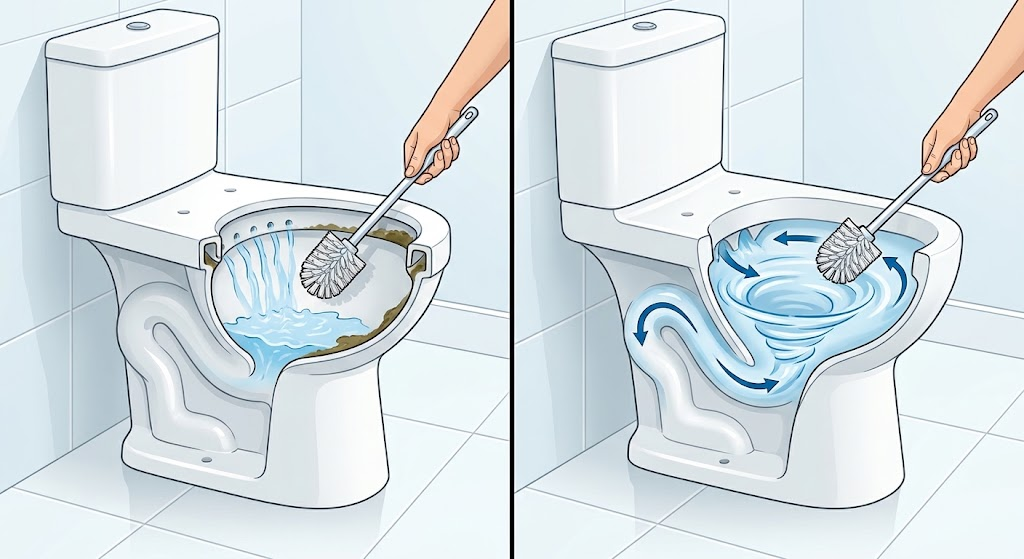
A rimless toilet is designed without the enclosed rim that normally runs around the upper inside edge of the toilet bowl. Instead of sending flush water through hidden channels beneath the rim, it directs water around the open bowl through specifically positioned outlets.
The main advantages are easier cleaning, fewer hidden areas where grime can collect, and more direct water distribution during flushing.
If you are currently comparing options, Luxern Home offers both standard toilet suites and dedicated rimless and tornado toilets for different bathroom layouts.
What Is a Rimless Toilet?
A traditional toilet normally has an enclosed rim around the top of the toilet pan. Flush water travels through this internal channel and exits through openings positioned around the bowl.
A rimless toilet removes most or all of this concealed channel.
This leaves the upper section of the toilet bowl more open and accessible. Water is instead directed around the bowl through one or more carefully positioned outlets.
The result is a simpler internal shape with fewer difficult-to-reach areas.
Rimless technology can be found across several toilet configurations, including:
-
back to wall toilets
-
close coupled toilets
-
wall hung toilets
-
toilets with concealed cisterns
“Rimless” therefore describes the design of the toilet pan, rather than the overall style of the toilet suite.
How Does a Rimless Toilet Work?
The main difference is the way the flushing system distributes water.
In a traditional toilet, flush water usually enters a channel beneath the rim before flowing down into the bowl.
A rimless toilet uses a more direct flushing mechanism. Water enters the bowl through strategically positioned openings and is directed around the ceramic surface.
Depending on the model, manufacturers may describe this as a:
-
direct flush system
-
vortex flush
-
tornado flush
-
cyclone flush
Although the names differ, the basic idea is similar. The flushing water is guided around the open toilet bowl rather than through a concealed rim channel.
The exact water pattern and flushing technology vary between manufacturers and toilet models, so it is worth checking the individual product specification rather than assuming every rimless toilet works identically.
Key Features of Rimless Toilets
Open Inner Bowl
The most obvious feature is the absence of the traditional enclosed rim.
Because the upper part of the bowl is exposed, there are fewer hidden areas that need to be reached with a toilet brush.
This is particularly useful during regular bathroom cleaning because you can see more of the surface you are cleaning.
Directed Flushing System
A rimless toilet generally uses targeted water outlets rather than multiple small openings concealed beneath a rim.
This allows the manufacturer to control how the water travels around the toilet bowl.
Australian toilet flushing systems are also subject to water efficiency and performance requirements. The Australian Government’s WELS toilet rating guidance explains how toilet water consumption is measured and rated.
Modern Toilet Designs
Rimless technology is available in several styles, so choosing rimless does not lock you into one particular bathroom design.
For example, you may find rimless technology in a compact back to wall toilet suite, a close coupled toilet or a wall hung toilet with a concealed cistern.
If space is an important consideration, Luxern Home’s guide to standard toilet bowl dimensions can help you check measurements before selecting a new toilet.
What Are the Benefits of a Rimless Toilet?
Easier to Clean
Cleaning is one of the strongest practical advantages.
A traditional rim can create areas that are difficult to see and reach. Mineral deposits, residue and grime can gradually collect around these concealed surfaces.
Because a rimless bowl has a more open design, you can access more of the ceramic surface directly with a toilet brush or cleaning cloth.
That does not mean a rimless toilet is maintenance-free. The bowl, seat, flush buttons and surrounding surfaces still need routine cleaning.
NSW Health cleaning procedures, for example, recommend cleaning the bowl, rim area, cistern controls and other frequently touched bathroom surfaces as part of proper toilet hygiene. NSW Health toilet-cleaning guidance
Fewer Hidden Areas for Buildup
The absence of a concealed rim channel means there are fewer difficult-to-reach areas where limescale and residue can accumulate.
This can make regular cleaning more straightforward, especially in homes with hard water.
It is better to describe this as an easier-to-clean design rather than claiming that a rimless toilet eliminates bacteria completely.
Consistent Bowl Coverage
Many rimless flushing systems are designed to distribute water around a large proportion of the bowl surface.
This can help rinse the bowl more evenly.
However, flush performance still varies by model. Bowl shape, cistern design, flushing mechanism and installation all contribute to performance.
Clean, Modern Appearance
Rimless toilets are commonly used in contemporary bathroom design.
They are available in streamlined back to wall and wall hung styles that work well with minimalist bathrooms and concealed plumbing.
For a wider renovation, you can also compare fixture spacing with Luxern Home’s standard bathroom dimensions guide before deciding which toilet format suits your layout.
Are Rimless Toilets More Water-Efficient?
Not automatically.
This is an important distinction.
A toilet being rimless does not by itself determine its water efficiency. Water consumption depends on the model’s flush volumes and WELS rating.
Under Australia’s WELS system, a typical 4-star dual-flush toilet uses around:
|
Flush type |
Typical water use |
|
Full flush |
4.5 L |
|
Reduced flush |
3 L |
Higher WELS star ratings indicate greater water efficiency.
When comparing rimless toilets, check the WELS rating rather than relying only on descriptions such as “water-saving” or “efficient flush”.
CHOICE also recommends comparing WELS ratings, toilet configuration and plumbing compatibility when selecting a new toilet. CHOICE toilet buying guide
Rimless Toilet vs Traditional Toilet
A simple comparison makes the differences easier to understand.
|
Feature |
Traditional Rimmed Toilet |
Rimless Toilet |
|
Inner bowl |
Concealed rim channel |
Open upper bowl |
|
Cleaning access |
More difficult beneath the rim |
Easier access to ceramic surfaces |
|
Flushing system |
Water passes through rim channels |
Water is directed around the bowl |
|
Limescale access |
Hidden buildup can be harder to reach |
More exposed and easier to see |
|
Water efficiency |
Depends on WELS rating |
Depends on WELS rating |
|
Available styles |
Wide range |
Wide range |
|
Maintenance |
Regular cleaning required |
Regular cleaning required |
The main advantage of a rimless toilet is therefore cleaning accessibility, rather than an automatic improvement in every aspect of performance.
Are There Any Disadvantages of Rimless Toilets?
Some Models Cost More
Depending on the manufacturer and toilet suite, rimless models may cost more than basic traditional toilets.
However, rimless technology is now available across a wide range of price points, so the difference is not always significant.
Flush Performance Varies Between Models
Not every rimless toilet uses the same flushing system.
A well-designed bowl should control water effectively, but performance depends on the individual toilet rather than the word “rimless” alone.
When comparing models, look at the WELS rating, product specifications and installation requirements.
Installation Compatibility Still Matters
A rimless design does not change the importance of your existing plumbing.
You still need to check factors such as:
-
S-trap or P-trap configuration
-
set-out measurements
-
cistern position
-
water inlet location
-
wall or floor outlet
-
available bathroom space
Luxern Home’s guide to P-trap vs S-trap toilets explains how the waste outlet affects toilet selection.
Plumbing and drainage are specialist licensed trades in NSW, so professional installation is generally appropriate where plumbing connections or drainage need to be altered. NSW Fair Trading plumbing licence information
What Should You Look for When Buying a Rimless Toilet?
Before choosing a rimless toilet suite, check the following.
WELS Rating
Look at the toilet's water efficiency rating and flush volumes.
Do not assume that every rimless model uses the same amount of water.
WaterMark Certification
Most plumbing and drainage products installed in Australia must meet applicable WaterMark requirements.
WaterMark certification indicates that an applicable plumbing product has been assessed against relevant product requirements and is suitable for its intended purpose. WaterMark guidance for toilets
Toilet Configuration
Choose a configuration that works with your room and plumbing.
Common options include back to wall toilets, close coupled toilets and wall hung toilets.
Set-Out and Trap Type
Check your existing plumbing before ordering.
The distance and direction of your waste pipe can determine which toilet pan will fit without major plumbing changes.
Seat and Additional Features
Depending on the toilet suite, you may also want features such as:
-
a soft-close seat
-
quick-release seat fittings
-
a concealed cistern
-
an easy-to-clean vitreous china finish
-
compatibility with a bidet seat
Only choose features you will actually use. The basic toilet dimensions and plumbing compatibility should come first.
Is a Rimless Toilet Worth It?
For many Australian bathrooms, a rimless toilet is worth considering if easier cleaning is one of your priorities.
Its main practical advantage is simple: removing the traditional concealed rim makes more of the bowl accessible when cleaning.
It can also suit modern bathroom design particularly well, with rimless technology available across back to wall, close coupled and wall hung toilets.
However, you should not choose a toilet based on the rimless label alone. Compare the toilet’s dimensions, trap type, WELS rating, flushing system and installation requirements before buying.
If you are planning a bathroom renovation or replacing an existing toilet, explore Luxern Home’s rimless toilet collection to compare available toilet suites, dimensions and flushing options.
Share: